Yellow Leaves Are Not “Normal.” They’re a Cry for Help.
Every plant parent eventually wakes up to the same horror:
A healthy green leaf suddenly turning yellow.
At first, you assume it’s “just aging.” Then the yellowing spreads.
One leaf becomes three. Then five.
Before you know it, half the plant looks sick — and you have no idea why.
Here’s the truth most beginners never hear:
Yellow leaves are not random. They always have a cause — and a fix.
A yellow leaf is your plant’s SOS signal.
It’s telling you something is wrong with its water, nutrients, soil, environment, or roots.
This brutally honest guide breaks down the exact causes of yellow leaves and the expert fixes that actually work. Additionally, it explains how to prevent yellowing in the future so your plants stay vibrant year-round.
SUMMARY — What You Will Learn
In this comprehensive 2025 Tarva guide, you’ll discover:
✔ The 3 major causes behind yellowing leaves
✔ How to diagnose each cause with simple signs
✔ Proven fixes you can apply immediately
✔ How soil quality impacts leaf color
✔ Why nutrients matter more than watering
✔ When a yellow leaf is normal vs. a real problem
✔ CTA to Tarva Soil + Compost Bundle for long-term prevention
This guide is designed for beginners but backed by professional plant-care standards.
Why Do Leaves Turn Yellow? (Before We Dive Into the H2s)
Yellowing happens when your plant cannot properly perform photosynthesis. That failure can come from stress, lack of nutrients, poor soil structure, root damage, excessive water, extreme dryness, or environmental shock.
Although many things can trigger yellow leaves, overwatering, nutrient deficiency, and shock are the big three. They account for almost every yellow-leaf complaint.
Now, let’s break each one down in detail — with exact fixes you can apply today.
H2: Overwatering – The #1 Cause of Yellow Leaves
Most plant parents think they’re killing their plants by not watering enough.
But in reality, the opposite is true.
Indoor plants die far more often from too much water than too little.
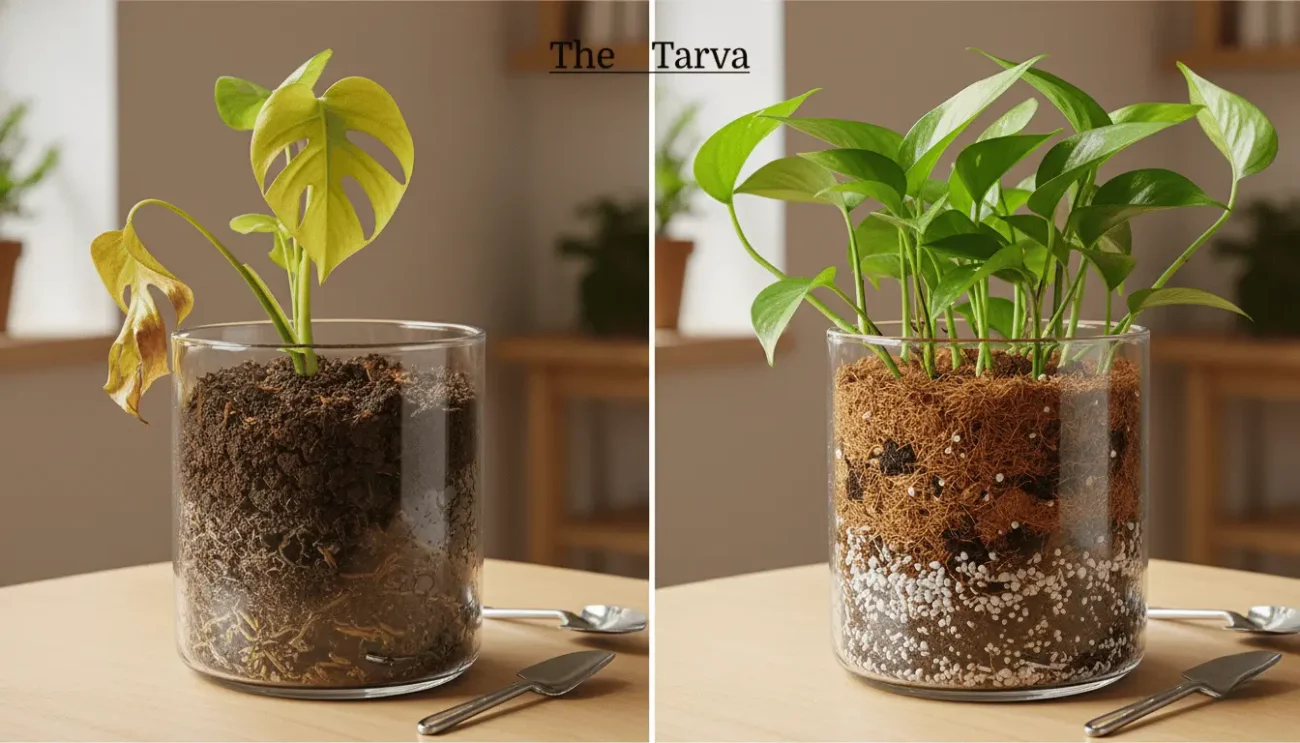
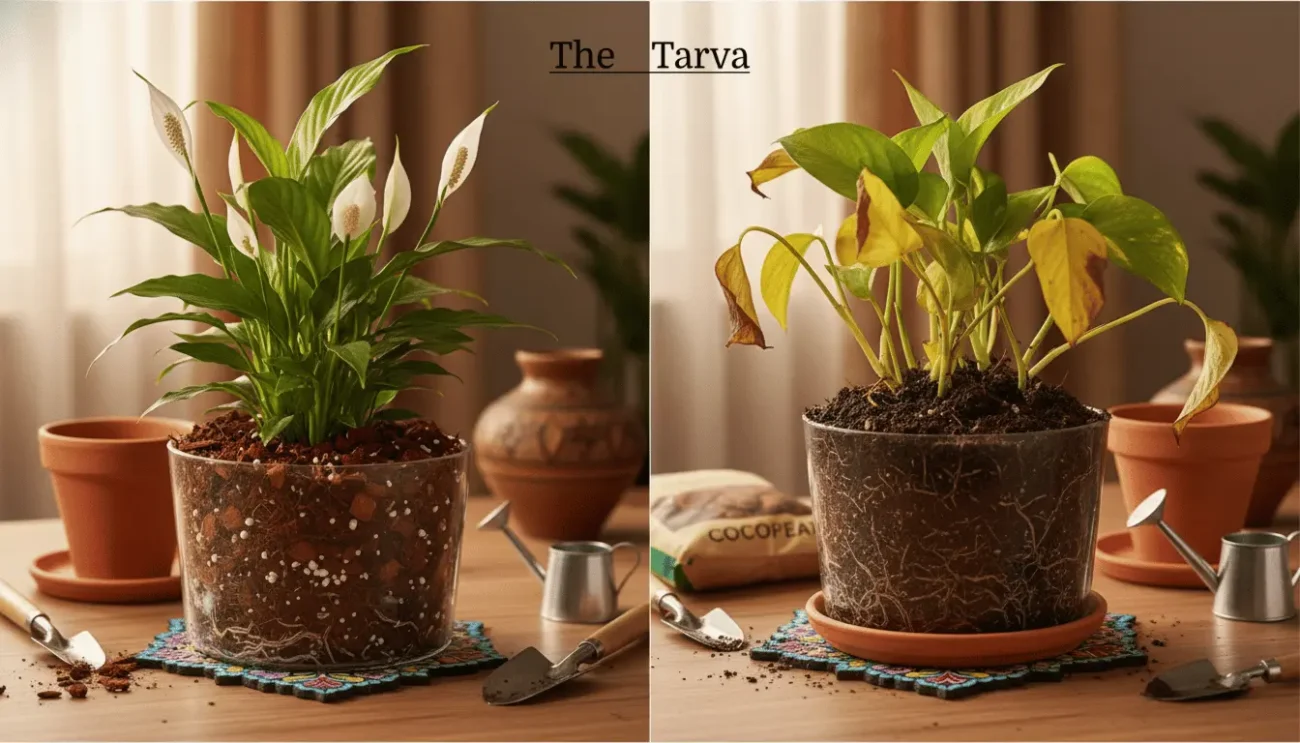
When soil stays wet for too long, roots suffocate because they cannot get oxygen. Eventually, they start rotting. Rotten roots can no longer absorb nutrients or support healthy growth. As a result, leaves gradually turn yellow — especially the older, lower ones.
Signs Your Plant’s Yellow Leaves Are from Overwatering
To avoid guessing, look for these symptoms:
- Soil stays wet for 3–5+ days
- Leaves turn soft, yellow, then drop
- Roots smell musty or rotten
- Fungus gnats hovering around the soil
- New growth is pale or stunted
- Lower leaves yellow first
Additionally, feel the pot weight. A consistently heavy pot almost always indicates overwatering.
Why Overwatering Happens
Surprisingly, most overwaterers are not actually watering too often — they’re using bad soil.
Overwatering is not the frequency of watering.
It’s the soil’s inability to drain excess water.
Common reasons include:
- Dense garden soil
- Compact cocopeat with no aeration
- No perlite or chips
- Pots without drainage
- Overly large pots that hold moisture
- Watering on a schedule instead of checking the soil
Fortunately, the fixes are simple.
Fixes for Overwatering (Do These Immediately)
1. Let the Soil Dry Completely
Do not water at all until the top 3 inches are bone dry.
2. Improve Light
Move the plant to bright, indirect light.
More light → faster drying → faster recovery.
3. Add Airflow
Switch on a fan nearby (not directly on the plant).
Airflow helps soil dry faster and prevents fungal issues.
4. Repot If Soil Is Smelly, Muddy, or Rotting
If the soil smells like sewage, replace it immediately.
Use an airy, fast-draining mix:
Tarva Recommended Mix:
- 40% cocopeat
- 30% coco chips
- 20% perlite
- 10% vermicompost
5. Trim Brown, Mushy Roots
Damaged roots cannot recover. Remove them cleanly.
6. Avoid Fertilizing for 3 Weeks
Fertilizer on damaged roots = instant burn.
How to Prevent Overwatering in the Future
- Water only when soil feels dry
- Use breathable mixes
- Always choose pots with drainage holes
- Add perlite or chips to lighten soil
- Avoid oversized pots
👉 Internal Link Placeholder:
How to Water Indoor Plants Properly → (add URL)
H2: Nutrient Deficiency – The Silent Cause of Fading, Pale, Yellow Leaves
If your plant’s leaves look pale yellow rather than mushy, the problem is very likely nutrient deficiency.
Indoor plants live in a closed environment.
Every time you water them, nutrients wash out of the soil. After 2–3 months, most potting mixes become nutrient dead — even if they look fine.
When a plant lacks specific nutrients, its leaves start yellowing in predictable ways.
Signs Your Plant Is Nutrient Deficient
Look for these patterns:
Nitrogen Deficiency:
- Lower leaves turn uniform pale yellow
- Slow growth
- Smaller new leaves
Iron Deficiency:
- New leaves are yellow with green veins
- Common in Peace Lilies & Pothos
Magnesium Deficiency:
- Yellowing around edges
- Some green remains in the center
Potassium Deficiency:
- Yellow edges
- Brown, crispy tips
Additionally, soil that is more than a year old almost always lacks nutrients.
Why Nutrient Deficiency Happens
- Soil older than 8–12 months
- Overwatering (nutrients wash out faster)
- Cocopeat-heavy soil without compost
- No fertilizer added for months
- Hard water affecting micronutrients
Therefore, every indoor plant needs regular feeding.
Fixes for Nutrient Deficiency (Fastest Results)
1. Add Vermicompost
It provides complete nutrition + microbes.
Dose:
- 2–3 tablespoons per 6-inch pot
- 4–6 tablespoons per 8-inch pot
Tarva Vermicompost is ideal for indoor use because it’s odorless, fine-textured, and pest-free.
2. Add Seaweed Extract
Stimulates leaf and root growth.
Mix once every 15–20 days.
3. Use a Balanced Organic Fertilizer
Feed monthly during growing season.
4. Replace Old Soil Every 12–18 Months
Old soil = dead soil.
5. Adjust Watering
Nutrients work only if soil stays lightly moist — not soggy.
Prevent Nutrient Deficiency Long-Term
- Add vermicompost monthly
- Replace soil annually
- Use cocopeat + compost + perlite blends
- Avoid cheap potting soil with zero nutrition
👉 Internal Link Placeholder:
How to Use Vermicompost for Indoor Plants → (add URL)
H2: Shock – The Most Misunderstood Reason for Yellow Leaves
Even with perfect soil and watering, plants can still turn yellow if they’re experiencing shock.
Shock happens whenever a plant faces a sudden change it cannot adjust to fast enough.
This is extremely common with newly bought plants.
Types of Shock That Cause Yellow Leaves
1. Light Shock
Moving a plant from a nursery greenhouse to a dark living room (or vice versa) stresses the leaves.
Signs:
- Sudden yellowing
- Drooping
- Weak new growth
2. Temperature Shock
Indoor plants dislike sudden changes such as:
- AC vents
- Heaters
- Cold windowsills
- Hot balconies
3. Repotting Shock
Beginners often repot too early or too aggressively.
Signs:
- One or two leaves turn yellow
- Plant stops growing
- Slight droop for 7–14 days
4. Transport Shock
Common when plants are ordered online or moved between homes.
Fixes for Plant Shock (Simple but Effective)
1. Move the Plant to a Stable Location
Choose a spot with:
- Bright indirect light
- No hot or cold drafts
- No direct afternoon sun
2. Reduce Watering Temporarily
Stressed plants drink less.
3. Do NOT Fertilize for 2–3 Weeks
Roots need recovery time.
4. Add Humidity
Mist lightly or keep a water tray nearby.
5. Be Patient
Shock recovery often takes 10–20 days.
Prevent Shock Before It Happens
- Acclimate plants slowly to new light
- Avoid repotting immediately after buying
- Do not expose plants to sudden temperature shifts
- Handle roots gently
👉 Internal Link Placeholder:
How to Revive a Dying Indoor Plant → (add URL)
Internal Links (Add URLs When Publishing)
- Best Soil Mix for Indoor Plants in India
- How to Make the Perfect Potting Mix
- How to Revive a Dying Plant
- Why Your Plant Is Dying – 10 Reasons
- Tarva Plant Care Essentials
CTA — Fix Yellow Leaves with the Tarva Soil + Compost Bundle
If you want a fast and long-term solution for yellow leaves, start with the basics:
Healthy soil + complete nutrition.
🌱 Tarva Soil + Compost Bundle (SKU: T-SCB-01)
Includes:
- Tarva Indoor Potting Mix (airy, breathable, pest-free)
- Tarva Vermicompost (nutrient-rich, odorless, microbe-loaded)
This bundle instantly improves:
✔ Root health
✔ Soil structure
✔ Drainage
✔ Leaf color
✔ Growth speed
👉 Shop the Tarva Soil + Compost Bundle → (insert link)
FAQs (SEO Boost)
1. Should I cut yellow leaves off?
Yes — once fully yellow. They won’t turn green again.
2. Can yellow leaves turn green again?
No. The plant must grow new healthy leaves.
3. How long does it take to fix yellow leaves?
Usually 1–4 weeks, depending on the cause.
4. Is yellowing always a sign of overwatering?
Not always. It may also be nutrient deficiency, low light, or plant shock.
5. Why do new leaves come out yellow?
This usually indicates iron or nitrogen deficiency.
6. Does changing soil stop yellowing?
Yes — if poor soil or overwatering caused the issue.