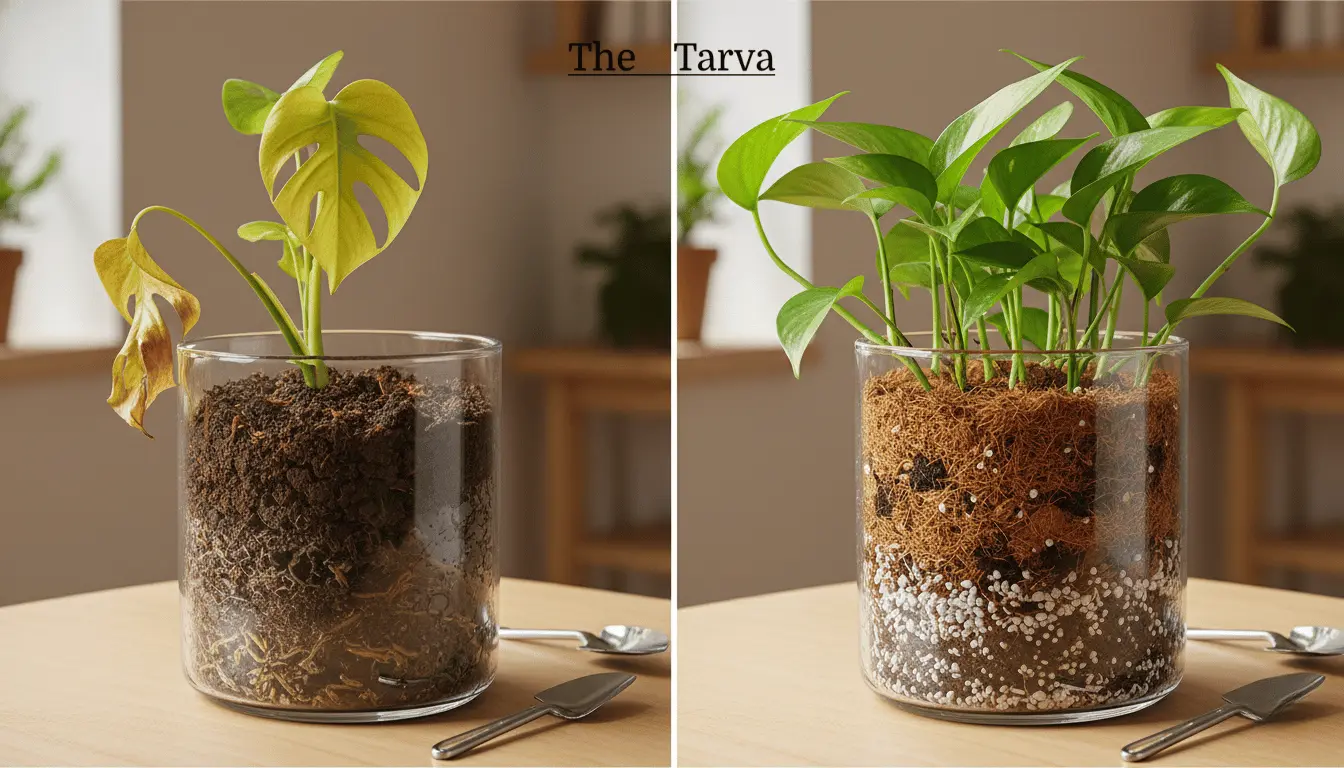
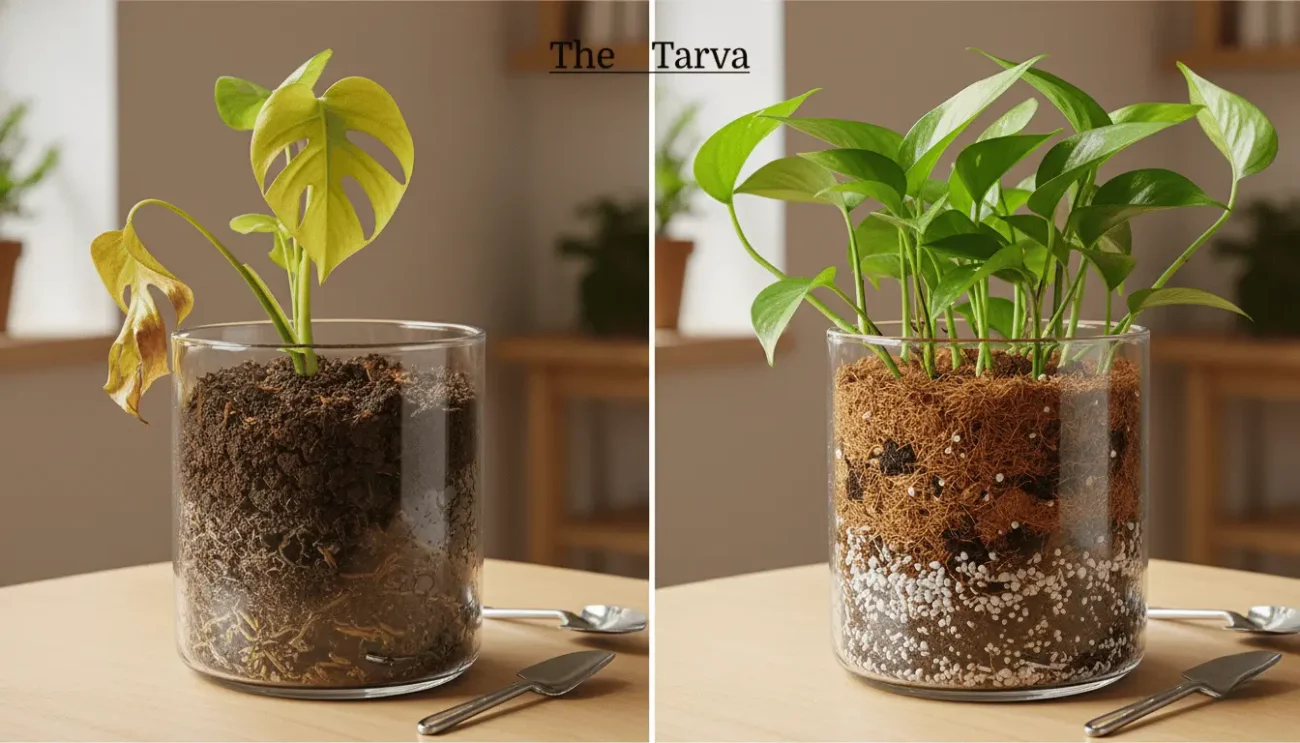
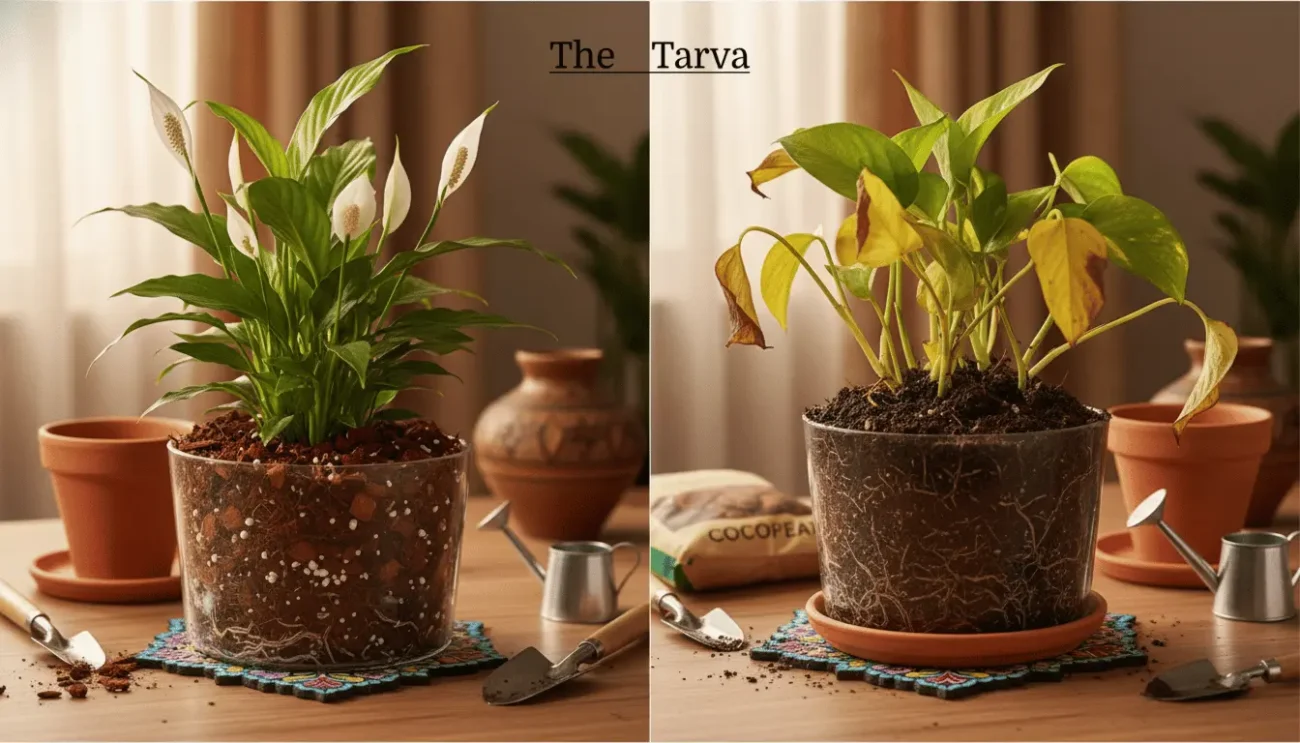
Why Most Home-Made Potting Mixes Fail ?
Most indoor plants don’t die because you “forgot to water them.”
They die because the soil was wrong from day one—too dense, too soggy, too nutrient-poor, or full of garden soil that suffocates the roots.
If your plants are yellowing, stunted, root-rotting, or refusing to grow, 80% of the time, the culprit is the potting mix.
The good news?
You can make professional-quality potting mix at home with just a few ingredients—and once you learn the formula, you’ll never kill a plant because of soil again.
This guide walks you through everything step by step.
Quick Summary
If you want the short version:
- A good potting mix must be airy, well-draining, nutrient-rich, and sterile.
- The universal home-friendly indoor plant mix is:
40% Cocopeat + 30% Compost + 20% Perlite + 10% Bark or Sand
- Different plants need different variations (cacti, aroids, herbs, etc.).
- You need basic tools like a sieve, gloves, container, and measuring cup.
- Mix everything in layers → hydrate → sterilise if needed → cure → store.
- For best results, use Tarva Cocopeat + Tarva Vermicompost as base ingredients.
What You Need to Make the Perfect Potting Mix at Home
Most people think potting soil = garden soil.
Wrong.
Garden soil compacts, suffocates roots, and breeds fungus gnats. Indoor plants need something very different.
Below are the exact ingredients professionals use:
1. Cocopeat (Foundation for Moisture + Soft Texture)
Cocopeat is the backbone of modern indoor mixes because it:
- Retains moisture without becoming muddy
Use it for: Almost all indoor plants.
Recommended: Tarva Cocopeat (premium fine-grade)
2. Compost or Vermicompost (Natural Fertility Booster)
Compost adds:
But use it carefully—too much compost makes the mix heavy.
Recommended: Tarva Vermicompost (clean, odorless, high nutrient content)
3. Perlite (Drainage + Aeration)
Perlite is that white, popcorn-looking mineral that keeps soil fluffy.
Why it matters:
- Allows oxygen flow to roots
If your plants stay wet for days, you need more perlite.
4. Pine Bark or Orchid Bark (Structure + Root Grip)
Bark creates pockets of air in the mix, making it ideal for:
These are climbing plants that prefer chunky soil.
5. Horticultural Sand (Optional)
Sand improves drainage but must be coarse.
Do NOT use beach or river sand — they contain salts and pathogens.
Use sand only if making mixes for succulent or cactus plants.
6. Neem Cake Powder (Pest Prevention)
If you want long-term protection against fungus gnats, mealybugs, and soil pests, neem cake is a must-have.
Use sparingly (5–10%).
Tools You Need (Beginner-Friendly)
You don’t need fancy gardening equipment.
Here are the basics:
✔ Large plastic tub or bucket
For mixing ingredients without spilling everywhere.
✔ Gardening gloves
Compost is safe, but gloves keep things clean.
✔ Soil sieve
Optional but very useful if you want a smoother mix.
✔ Measuring cup or bowl
To maintain ratios correctly.
✔ Spray bottle
To hydrate the mix evenly.
✔ Airtight container or bag
For storing the final mix indoors.
If you have these, you’re ready to mix like a pro.
Step-by-Step Guide to Making Potting Mix at Home
Here’s the exact method used by nurseries and professional growers — simplified for beginners.
Step 1: Break and Hydrate the Cocopeat
If using a cocopeat brick, soak it in water until it expands 5–6×.
Fluff it with your hands.
Cocopeat should feel like a squeezed-out sponge.
Step 2: Sieve Your Compost
This removes:
- Partially decomposed material
Fine compost = better mixing = fewer fungus gnats.
Step 3: Measure Your Ingredients
For a universal indoor mix:
Keep everything loose and airy.
Step 4: Layer the Ingredients
Professional tip: Layer before mixing.
This ensures even distribution.
Example:
- Final sprinkle: Neem cake / Bark
Step 5: Mix Slowly
Use your hands or a small trowel.
Break clumps.
Introduce air.
Mix until everything looks uniform.
Step 6: Light Hydration
Use a spray bottle, not a mug.
You want slightly moist, not wet.
Wet soil = compaction + no air = root rot.
Step 7: Rest the Mix for 24 Hours
This allows:
- Moisture to evenly distribute
Step 8: Store Properly
Keep in a clean, dry container away from sunlight.
Your potting mix is now ready for repotting, propagation, and planting.
Variations for Different Plants
Not all plants want the same texture.
Here are Tarva-recommended formulas:
1. Aroid Mix (Monstera, Philodendron, Syngonium, Anthurium)
Chunky + airy = happy roots.
2. Succulent & Cactus Mix
- 10% Small stones / gravel
Fast-draining, so roots never sit in water.
3. Snake Plant / ZZ Plant Mix
These plants hate wet feet — give them extra drainage.
4. Fern Mix (Moisture-Loving Plants)
Moist but airy = perfect for ferns.
5. Flowering Plant Mix (Peace Lily, Anthurium, Begonia)
Nutrient-rich and moisture-retentive.
Our Recommendation:
Top blogs:
- “Best Soil Mix for Indoor Plants in India (2025 Guide)”
- “10 Best Low-Light Indoor Plants for Home & Office”
And Top products:
Make It Easier: Start With Tarva Cocopeat + Vermicompost
If you want consistent results without trial and error:
👉 Use Tarva Cocopeat (premium fine-grade) + Tarva Vermicompost (nutrient-rich and odorless)
Your plants will grow faster, stay healthier, and resist pests naturally.
Shop now at thetarva.com
FAQs (SEO Boost)
1. Can I use garden soil in potting mix?
No. It compacts, drains poorly, and carries pests. Indoor plants need airy, sterile soil.
2. Is perlite necessary?
Yes. It prevents root rot and creates essential air pockets.
3. How long can I store homemade potting mix?
3–6 months in an airtight container.
4. Why is my potting mix attracting fungus gnats?
It’s staying wet too long. Add more perlite and reduce watering.
5. Can I skip compost?
No. Compost provides nutrients and beneficial microbes.
6. Do I need to sterilize potting mix?
If you’re using home-made compost or soil, sterilization is recommended.
7. How often should I replace soil?
Once every 12–18 months for best plant health.