Most Plants Don’t Die Overnight. They Die Slowly. Here’s Why.
If your plant looks sad, droopy, yellow, crispy, or “just not growing,” it’s not random bad luck.
It’s not because you’re a bad plant parent.
And it’s definitely not because “this plant is difficult.”
The harsh truth?
Plants die because something in their care routine is wrong — and the signs were visible long before the plant collapsed.
Indoor plants are predictable.
They show the same symptoms, make the same mistakes obvious, and respond the same way every time.
This brutally honest guide explains the 10 real reasons your plant is dying, how to diagnose each problem, and how to fix it today.
SUMMARY — What You Will Learn
This beginner-friendly, guide covers:
- The 10 most common plant-killing mistakes
- Symptoms to watch for
- Exact fixes you can apply immediately
- How to revive stressed indoor plants
1. Overwatering (The #1 Plant Killer Worldwide)
Overwatering kills more plants than pests, weather, and poor soil combined.
Roots need oxygen — not a mud bath.
Signs You’re Overwatering:
- Yellow leaves
- Mushy stems
- Soil smells bad
- Fungus gnats
- Leaves dropping from the bottom
- Soil stays wet for 4+ days
Why It Happens:
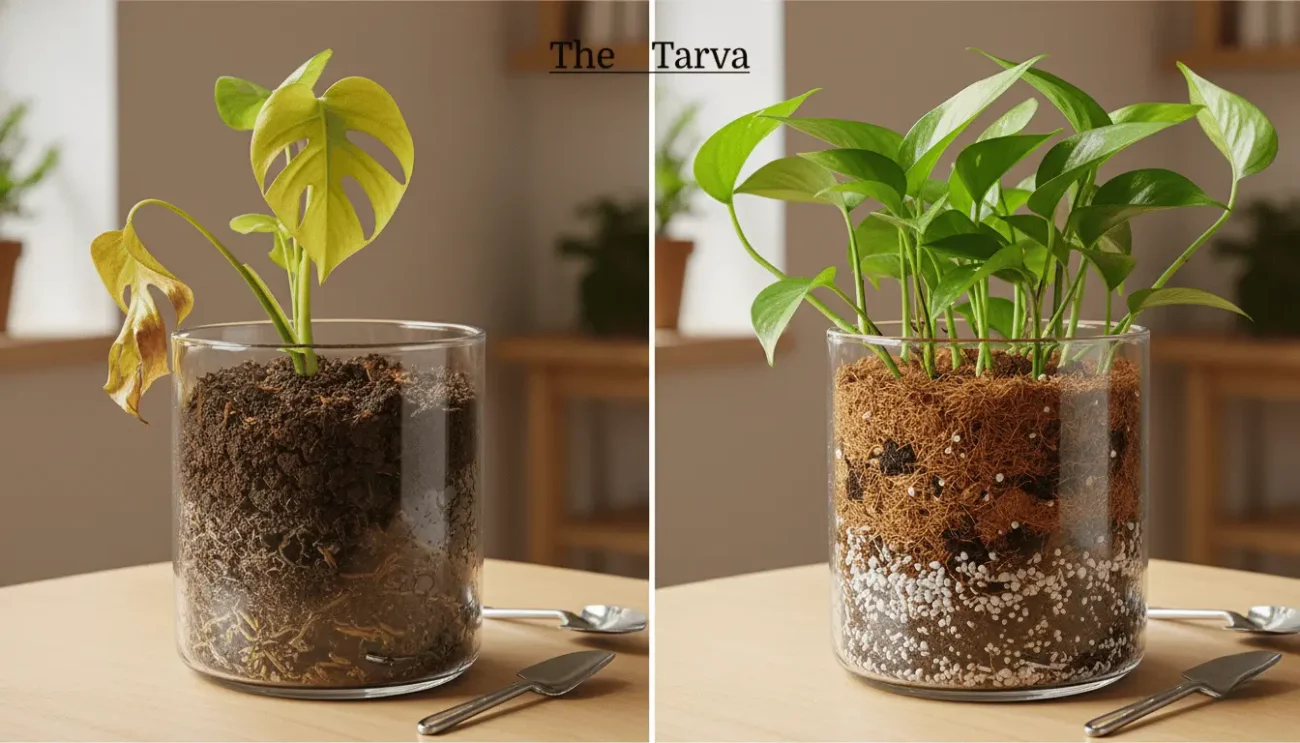
- Using the wrong soil (too dense)
- No drainage hole
- Watering on a schedule instead of checking soil
- Large pots holding excess moisture
How to Fix It:
- Let soil dry 100% before watering
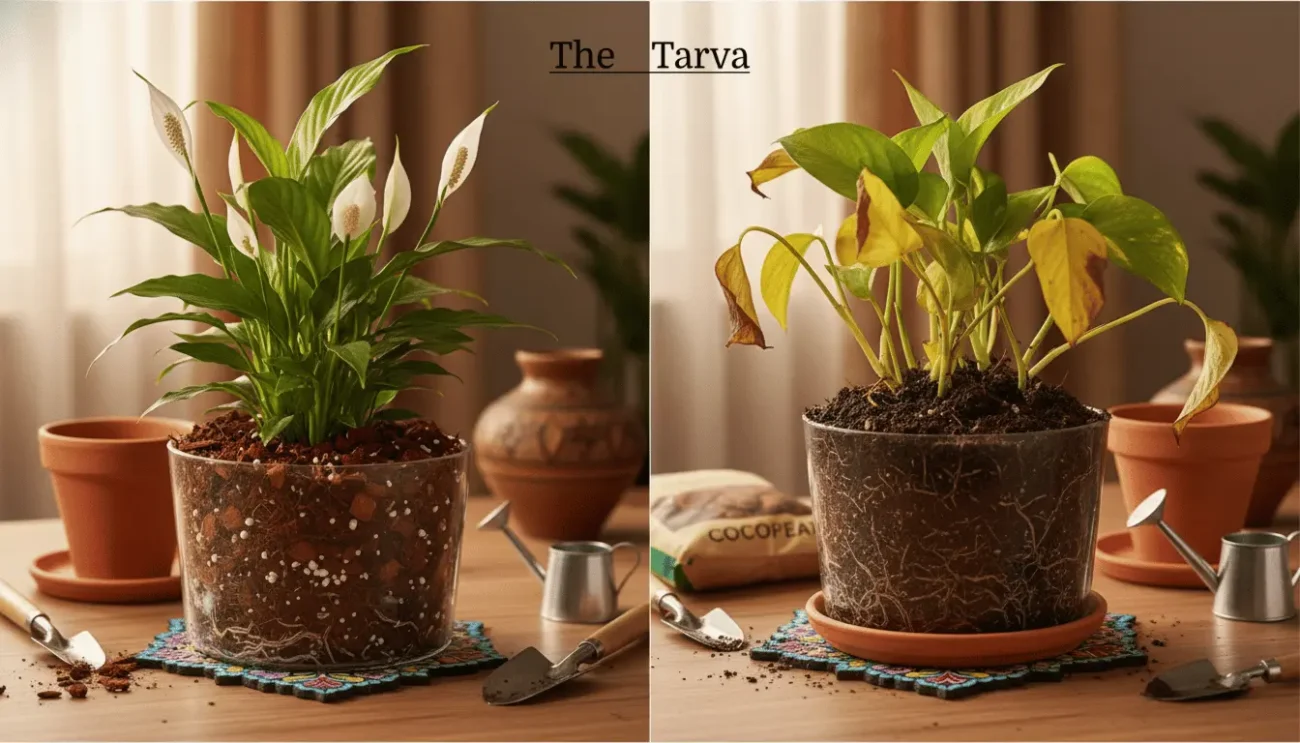
- Switch to an airy mix (cocopeat + perlite + chips)
- Always check moisture with your finger
- Repot into Tarva Indoor Potting Mix if rot has started
How to Fix Overwatered Plants
2. Underwatering (Slow, Silent Plant Stress)
People often think underwatering means “you forgot to water.”
Not necessarily. Indian climates + AC rooms can dry soil extremely fast.
Signs of Underwatering:
- Crispy edges
- Soil pulling away from pot
- Leaves curling inward
- Stunted growth
- Light-colored, dusty soil
Why It Happens:
- Terracotta pots drying too fast
- Too much perlite in soil
- Hot + dry rooms
- Small pots
How to Fix It:
- Water deeply until water drains out
- Avoid shallow, frequent watering
- Add cocopeat to improve moisture retention
- Mulch the top with coco chips
How Often Should You Water Indoor Plants?
3. Poor Soil (The Real Killer No One Talks About)
This is the most overlooked reason plants die.
Bad soil suffocates roots, holds water too long, gets compacted, or contains no nutrients.
Warning Signs of Bad Soil:
- Soil turns hard like stone
- Water sits on top, not absorbing
- No new growth
- Soil smells foul
- Fungus gnats
Why It Happens:
- Using garden soil indoors
- Cheap “potting soil” filled with mud
- No perlite or aeration
- Zero nutrition
How to Fix It:
- Replace soil entirely
- Use cocopeat + perlite + compost blend
- Choose Tarva Indoor Potting Mix (pre-balanced, airy)
- Add 10–20% Tarva Vermicompost every 30 days
Best Soil Mix for Indoor Plants in India
4. Wrong Lighting (Most Plants Die Because They’re in the Wrong Spot)
Light is fuel.
Without enough light, plants can’t make energy, so they slowly decline.
Signs of Low Light:
- Small new leaves
- Leggy growth
- Soil stays wet longer
- No new growth for months
Signs of Too Much Light:
- Brown, crisp patches
- Bleached leaves
- Soil drying too fast
Fix It:
- Put low-light plants 3–5 feet from a window
- Place bright-light plants right near the window
- Avoid direct sun unless plant is sun-loving
- Rotate every 2 weeks
10 Best Low-Light Plants for Home & Office
5. Pests (Often Caused by Weak Soil + Overwatering)
Indoor plants get pests — especially in humid Indian homes.
Common Pests:
- Mealybugs
- Spider mites
- Aphids
- Thrips
- Fungus gnats
Warning Signs:
- Sticky leaves
- White cottony clumps
- Fine webs
- Tiny flies around soil
Fix It Immediately:
- Spray neem oil weekly
- Keep leaves clean
- Improve soil drainage
- Never bring new plants inside without checking
How to Remove Mealybugs Naturally
6–10 (The Remaining Silent Killers That Beginners Ignore)
6. Root Bound Pots
Roots circle the pot and choke themselves.
Fix: Repot every 12–18 months.
7. Wrong Pot Size
Pot too big = root rot.
Pot too small = stunted growth.
Fix: Increase pot size by 1–2 inches only.
8. No Fertilizer
Soil loses nutrients every time you water.
Fix: Add vermicompost monthly.
9. Temperature Stress
Plants hate drastic temperature changes.
Fix: Avoid AC vents, heat sources, and balconies with harsh sun.
10. Dirty Leaves Blocking Light
Dust blocks photosynthesis.
Fix: Wipe leaves monthly with a damp cloth.
Recommended Blogs
- How to Use Vermicompost for Indoor Plants
- Best Soil Mix for Indoor Plants in India
- How to Make Perfect Potting Mix at Home
- Indoor Plants for Beginners Guide
- Tarva Indoor Plant Care Collection
Read These Related Tarva Articles
To understand plant care deeply and avoid repeating mistakes:
- Best Soil Mix for Indoor Plants in India
- How to Make the Perfect Potting Mix at Home
- How to Use Vermicompost Correctly
- 10 Best Low-Light Indoor Plants for Beginners
- Why Your Plant Is Drooping (Quick Fix Guide)
FAQs
1. What’s the number one reason indoor plants die?
Overwatering + poor soil drainage.
2. Can a dying plant be revived?
Yes — unless the roots are fully rotten or dried.
3. Should I fertilize a dying plant?
No. Fix the soil and watering first, then feed.
4. How long does it take a stressed plant to recover?
2–6 weeks depending on damage.
5. Do indoor plants need sunlight?
Yes — even low-light plants need indirect light.